Home · Services · Water Removal After a Fire
Water Removal After a Fire in Ann Arbor, MI
Quick answer
Extracting and drying the water firefighters used, which soaks floors, walls, and contents while the fire is being put out.
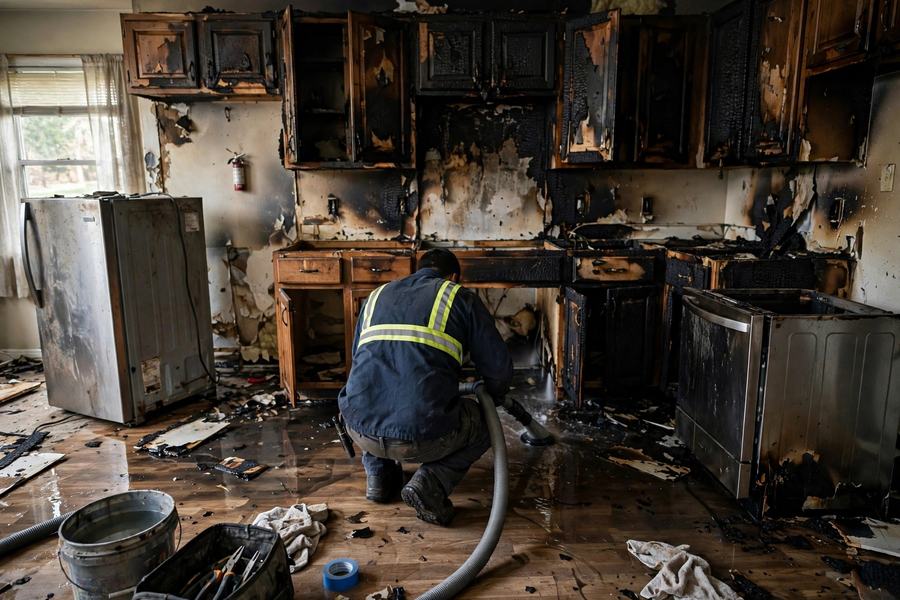
The water an Ann Arbor fire leaves behind is the second loss, and it starts ageing immediately: hundreds of gallons sit inside older framing, migrating into floor voids and plaster that give moisture back slowly. Pumping out and then drying under meter readings proceeds in parallel with the soot work rather than behind it, because a building cleaned of smoke while still wet has simply exchanged one restoration for another, and where walls are shared, the neighbouring unit belongs on the readings map too.
Signs you need water removal after a fire
- Standing water or soaked flooring in the rooms that burned and below them
- Water stains spreading on ceilings under the fire floor
- Wet insulation, drywall, and baseboards near the fire area
- A musty smell starting within a day or two of the fire
What the job involves
What affects the price
- How much water was used, which tracks with how long the fire burned
- How many levels the water reached, including the floor below the fire
- Materials involved: hardwood, laminate, and carpet over pad all dry differently
- Whether contaminated material must come out rather than dry
- Equipment days the moisture readings actually require
When it is an emergency
Firefighting water starts a mold clock of roughly 24 to 48 hours in warm conditions. The fire damage is the visible emergency, but the water sets the deadline: extraction and drying belong in the first scope of work, not a later phase.
PLACEHOLDERWater Removal After a Fire across the Ann Arbor area
Related services
Fire Damage Restoration
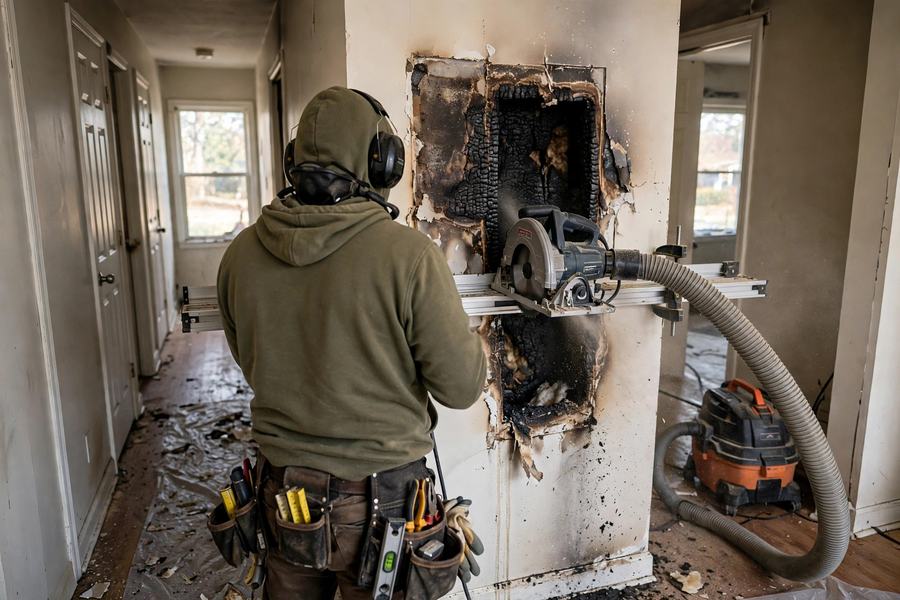
Full restoration after a fire in the home: securing the property, removing what burned, cleaning smoke and soot, and rebuilding what the fire took.
Smoke Damage Cleanup
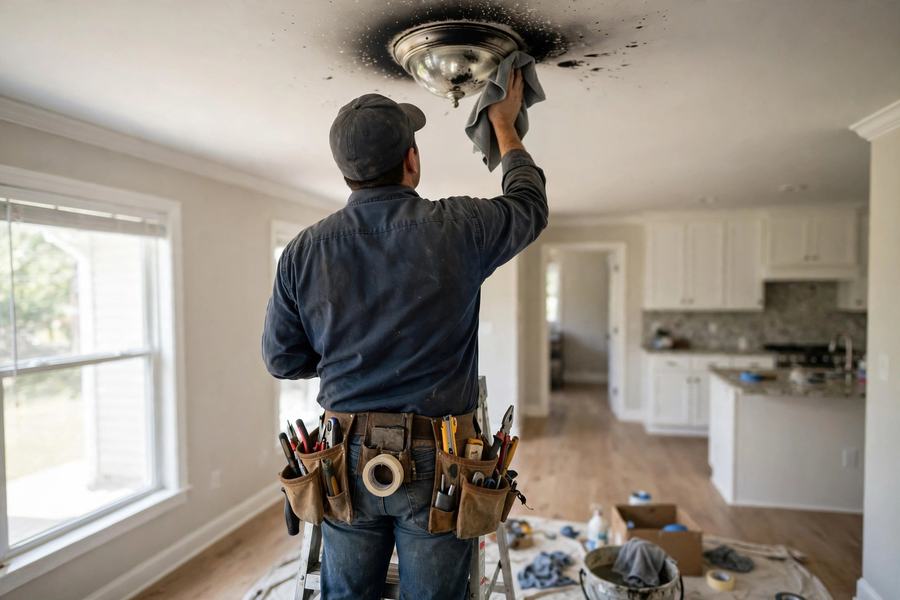
Cleaning smoke residue and odor from walls, ceilings, and belongings, including in rooms the flames never reached.
Furnace Puff Back Cleanup
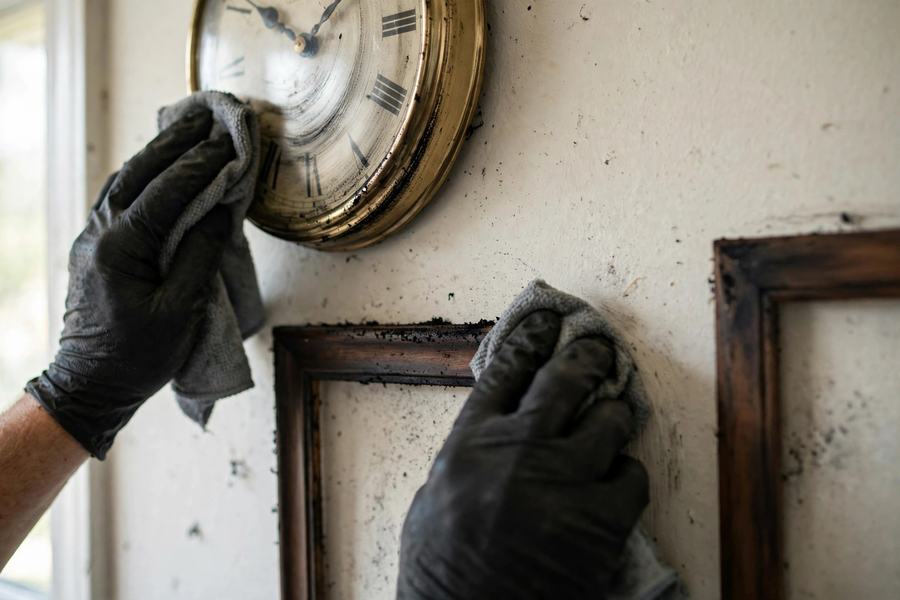
Cleaning the oily soot a furnace or boiler puff back blows through the heating system and into every room.
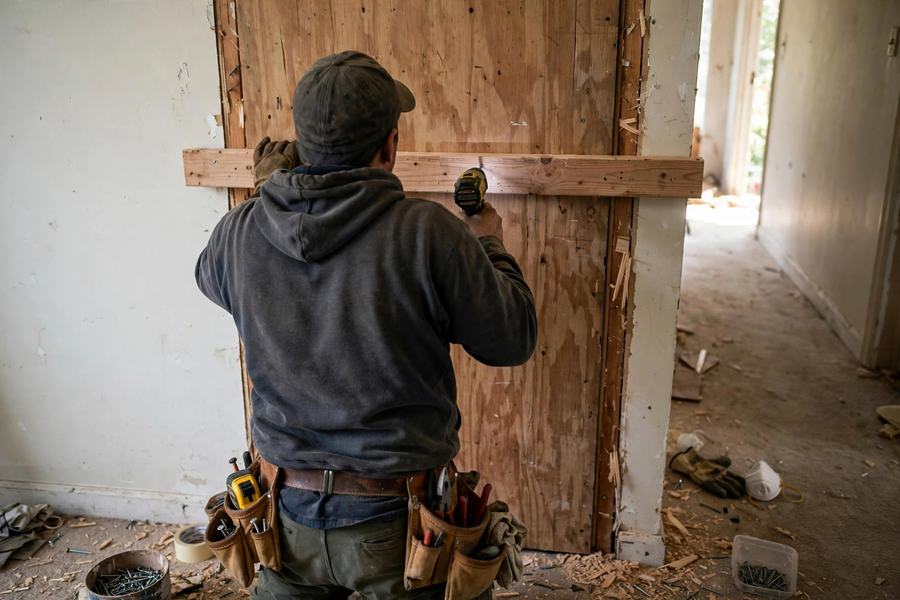
Emergency Board Up and Tarping
Securing a fire damaged home the same night: boarding broken windows and doors, and tarping roof damage so weather stays out.
Water Removal After a Fire questions, answered
When is water removal after a fire an emergency?
Firefighting water starts a mold clock of roughly 24 to 48 hours in warm conditions. The fire damage is the visible emergency, but the water sets the deadline: extraction and drying belong in the first scope of work, not a later phase.
What affects the price of water removal after a fire in Ann Arbor?
The main price factors for water removal after a fire are covered in the cost section above. The contractor confirms the exact price in a written estimate after seeing the job, and nothing is owed until you approve it. The call and the referral are free.
What is a furnace puffback, and why is it an Ann Arbor winter call?
A puffback is a misfiring oil or gas furnace blowing soot through the duct system in a single event: every room filmed with a fine oily layer, and no fire anyone saw. The ranking bench in this market names puffback cleanup as a standing service line because the heating belt produces it every winter. The scope pairs the soot cleaning with the furnace service that fixes the cause, in that order; cleaning first and servicing later just films the house twice.
The fire was in the unit next door. Is the smoke in my Ann Arbor home still a claim?
Yes, in the standard case: smoke damage from a fire is fire damage, whether the fire was in your kitchen or through a shared wall. What the claim needs is the interior record: ash and soot at window tracks, vents, and ducts, photographed before cleaning, plus the date of the event. In Ann Arbor's wood-frame and shared-wall stock this is the typical loss pattern, not the exception, and crews scope it as a smoke job in its own right.
Does homeowners insurance cover fire damage restoration in Ann Arbor?
Fire is a named peril in standard homeowners policies, so fire damage is generally covered, including smoke damage to rooms the flames never reached and the water damage from putting the fire out. The disputes are almost never about whether fire is covered; they are about scope and price. Keep the contractor's itemized written scope, the moisture and cleanup documentation, and photos, because those are what an adjuster reviews. Your deductible applies, and loss of use coverage, if you carry it, can pay for temporary housing while the home is uninhabitable.
Request a callback
Prefer to talk later? Leave your details and an independent local pro will call you back. No charge to you, no obligation.
Huron River Fire Restoration is a free referral service. Submitting this form connects you with independent local contractors who provide the work.